Pages

Saturday, 7 November 2015

100 years since the birth of Orson Welles—Part 1

May 6 marked one hundred years since the birth of Orson Welles, one of the most remarkable figures in American film and theater in the 20th century.
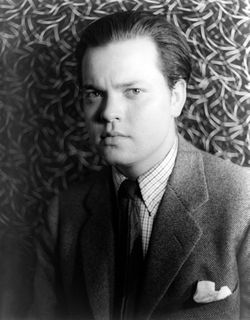
Orson Welles, 1937
Welles began acting and directing at an early age. After gaining success in the theater and in radio in New York City in the late 1930s, he signed a contract with RKO, the Hollywood studio, and directed his first film, Citizen Kane, at the age of twenty-five. After various battles with studio executives and in the face of the anti-Communist purges in Hollywood, Welles left for Europe in 1947 and made films there as an independent, itinerant director before returning to the US in the mid-1950s. The last years of his life were dominated by unsuccessful and sometimes demeaning efforts to raise funds for various projects.
Welles died thirty years ago, leaving behind thirteen feature films. Setting aside five weaker efforts, three of them late in his career, there are eight films that make up the main body of his contribution: Citizen Kane (1941), The Magnificent Ambersons (1942), The Lady from Shanghai (1947), Macbeth(1948), Othello (1952), Mr. Arkadin (1955), Touch of Evil (1958) and Chimes at Midnight (1965). Each of these is strongly recommended to the reader.
Welles also left behind many uncompleted film works or projects, including versions of Moby Dick, King Lear, The Merchant of Venice and Don Quixote, along with countless original scripts or film fragments. In addition, of course, although it falls outside the scope of this appreciation, there is Welles’ work in the theater (famed productions in the 1930s of Julius Caesar and Macbeth, Christopher Marlowe’s Dr. Faustus, Georg Büchner’s Danton’s Death and many more) and radio (dozens of adaptations of classics and performances of original works). In addition, Welles provided the story idea for Charlie Chaplin’s remarkable Monsieur Verdoux (1947).
A special word must also be put in for the 1993 documentary, It’s All True: Based on an Unfinished Film by Orson Welles (Bill Krohn, Myron Meisel, Richard Wilson), which in exemplary fashion discusses Welles’ efforts to make a three-part feature, It’s All True, in Latin America in 1941-42, and includes remarkable footage he shot there.
Welles created and portrayed press magnate Charles Foster Kane, sailor and agitator Michael O’Hara, the sinister financier Gregory Arkadin and the brutal policeman Hank Quinlan, and brought to life Shakespeare’s barbaric Macbeth, doomed Othello and comic-tragic Sir John Falstaff.
As a film writer and director (along with his collaborators), Welles invented dozens of fascinating major and minor personalities. One could add to those a number of figures not originally of Welles’ creation, but whom he reworked, for example, Lady Macbeth (Jeanette Nolan), Iago (Micheál MacLiammóir) inOthello, and numerous characters in Chimes at Midnight (adapted from several of Shakespeare’s plays).
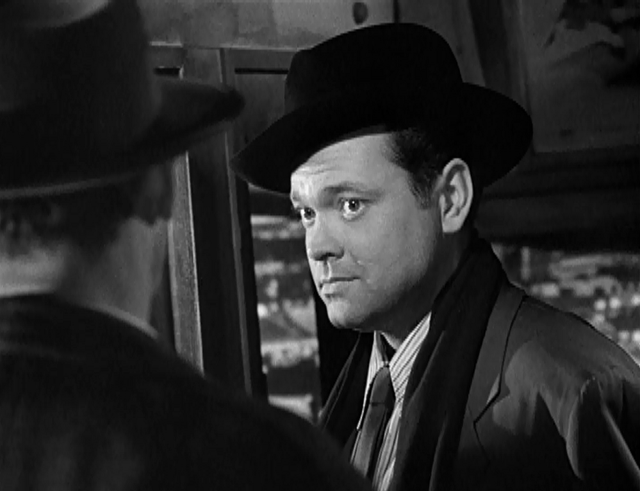
Welles in The Third Man
Welles also appeared imposingly as an actor in scores of films directed—well or badly—by others, including Journey Into Fear, Jane Eyre, Tomorrow is Forever, Black Magic, The Third Man, Prince of Foxes, Moby Dick, Man in the Shadow, The Long, Hot Summer, Compulsion, Ferry to Hong Kong, The V.I.P.s, Is Paris Burning?, A Man for All Seasons, Casino Royale, The Sailor from Gibraltar and Catch-22. His reputation was such that he is credited, rightly or wrongly, with influencing the direction of a number of these films, including Journey Into Fear, Jane Eyre and The Third Man.
At its best, Welles’ directorial work contains a poetic, sensual, socially critical urgency perhaps unmatched in the American cinema. Steeped in Shakespeare and the classics, coming of age in the turbulent conditions of the Great Depression, always striving for a wide audience, Welles imbued his films with an intelligence and an intensity that make them almost unfailingly appealing.
As we wrote nearly 20 years ago: “Welles was an extraordinary talent, perhaps the greatest theatrical mind in American history. He had the uncanny ability to place people among objects and decor and set them in motion so that the dramatic problems inherent in their lives could emerge with great clarity and force.”
It is telling that Welles, whose last major work came out half a century ago, appears more contemporary, more engaging than the vast majority of our present-day film writers and directors.
At the same time, if his aspiration was to be the Shakespeare of modern American life, Welles failed at that, and the incomplete, unfinished character of his work cannot be blamed solely on a hostile and obtuse studio system. There was something unresolved and inadequate about his conceptions, including damaging illusions in American capitalist democracy and an over-concern (even if a critically minded one) with “great men,” that prevented him from treating contemporary society in an all-rounded and comprehensive fashion.
Bound up with that, Welles, always a bit of an aristocrat in his tastes and demeanor (a self-described “king actor,” i.e., one suited to play only authoritative roles), was rarely able to depict the conditions and feelings of the oppressed in a convincing manner. Filmmakers less brilliant than he in the post-World War II period were better able to represent the concrete character of working class life.
His was for the most part a world of articulate, forceful personalities engaged in dramatic encounters about significant moral and social issues: corruption, greed, treachery in high places, official brutality, the danger of tyranny. The confrontations, however, largely take place over the heads of the average citizen, who is reduced, one might say, to the role of a mesmerized spectator. The intervention of masses of people in making history almost never arises as a serious issue.
Much of the intellectual-ideological unsteadiness in Welles’ work, in our view, comes from attempting to fit events somewhat awkwardly and regressively into the mold of momentous personal chronicles in a century dominated by global civil war and the movement of vast social forces.
To treat the complexities of twentieth-century existence with “Shakespearean” objectivity, in other words, required an outlook more precise and more advanced than the Elizabethan playwright’s own.

Citizen Kane and The Magnificent Ambersons

Welles’ first film, Citizen Kane, is one of the most discussed in the history of the cinema. Perhaps in response to the semi-official designation of the work as the “greatest film of all time,” there is a tendency today to treat it with a certain degree of condescension. Citizen Kane may well not be Welles’ best work, but it is a remarkable achievement nonetheless, and not simply because it was directed by someone only a few months after his twenty-fifth birthday, who had never previously made a feature film.
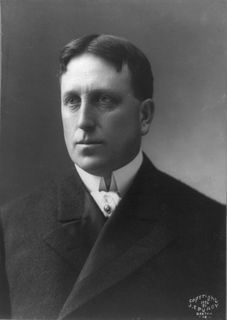
William Randolph Hearst
The film depicts the life and times of Charles Foster Kane (Welles), a fictional media mogul, based in part on newspaper owner and multi-millionaire William Randolph Hearst, as well as a number of other American tycoons. It begins with Kane dying virtually alone in his mausoleum of a mansion in 1941 and proceeds to follow the efforts of a reporter to find out something about the man, through conversations with a number of those who knew him well.
The bulk of the film is told in a series of overlapping flashbacks. We first return to 1871, when the action occurs that largely determines everything to come. Kane’s mother (Agnes Moorehead), who runs a boarding house in Colorado, has been given the deed to a gold mine that has proven immensely valuable. She determines, against her husband’s ineffectual protests and contrary to the inclinations of her own heart, to send her young son away to the East to be raised and educated under the guardianship of a cold, stiff banker, Mr. Thatcher (George Coulouris).
French critic André Bazin suggested Welles was obsessed with or nostalgic about childhood. If so, it was an obsession with something more than the filmmaker’s own formative years, or those of one or more of his fictional characters. At issue here, in our opinion, is the childhood of modern industrial and commercial America. Welles’ first two films (Citizen Kane and The Magnificent Ambersons) both begin in the 1870s, the decade following the Civil War, on the eve of the emergence of the US as an economic world power. Kane senior (Harry Shannon) mutters, “The idea of a bank being the guardian [of his son]!,” but surely the film’s implication is that financial institutions became the overseers and controllers of American life as a whole, with far-reaching consequences.
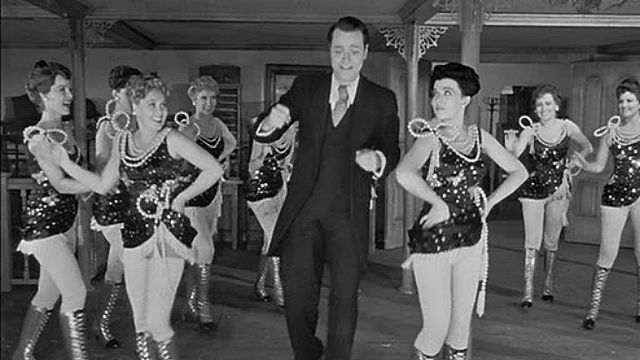
Citizen Kane
But is Welles “nostalgic” for the America that was lost? He is certainly too historically aware to believe that the US could have retained its semi-rural character, dominated by small-town life and small, family-owned business. Indeed, both films point to the narrowness and backwardness of such a sort of existence. For instance, when the young Kane’s father suggests that what “the kid needs is a good thrashing,” Mary Kane responds pointedly, “That’s why he’s going to be brought up where you can’t get at him.”
Nonetheless, there is an ambivalence in Welles about the development of modern society, which becomes more pronounced in The Magnificent Ambersons. To suggest that twentieth-century American life, with its factories and cars and “dark” cities, is principally something to be dreaded (“a step backward in civilization”), which Welles borders on arguing, is to ignore or remain blind to the historically earth-shaking and potentially revolutionary implications of that development. And this is an unsettled issue in Welles’ thinking and art that never goes away. Citizen Kane does hint in a couple of places at the possibility of social upheaval going beyond the present political set-up. In his early days as a populist muckraker, Kane informs Thatcher, the banker, that as a newspaperman he intends to look after the interests of “the working people,” adding ominously, “I think I’m the man to do it. You see, I have money and property. If I don’t look after the interests of the underprivileged, somebody else will. Maybe somebody without money or property. That would be too bad.”
Later in the film, a drunk Jed Leland (Joseph Cotten), Kane’s longtime friend and collaborator, warns the budding mogul, “When your precious underprivileged really get together, oh, boy, that’s gonna add up to something bigger than your privilege and I don’t know what you’ll do. Sail away to a desert island, probably, and lord it over the monkeys.”
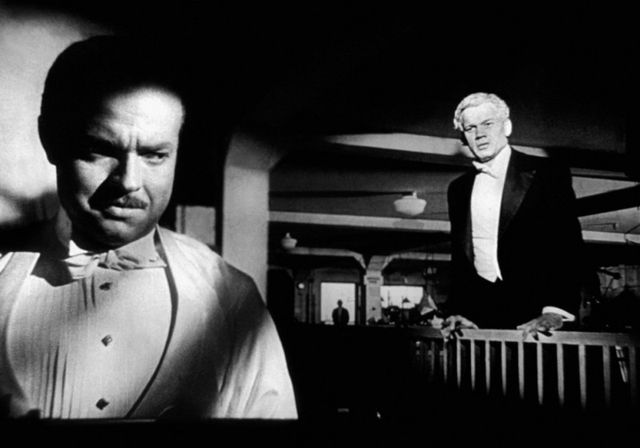
Citizen Kane
In any event, the emotional needs of the boy Charles Kane are sacrificed on the altar of economics and respectability, and that sets the tone for the entire film. Kane becomes an acquirer of things, or treats other people as things he can acquire. In the end, surrounded by statues he has bought, he turns into something resembling stone. The American dream of success and possession of money and objects becomes an unbearable nightmare.
There are portentous and somewhat laborious elements in Citizen Kane, including the opening and closing sequences set in Kane’s Xanadu mansion. There are also sequences done in an unnecessarily elaborate fashion.
But Citizen Kane also includes scenes carried off with extraordinary visual flair and even brilliance. The scene of the banquet held to celebrate the success of Kane’s first New York newspaper is one of those. Kane, still a young man, is at his most charming and charismatic, flirting with a group of dancing girls who sing a silly number about him. His new staff members, all bought from a rival, are admiring him and the women. Fun and laughter and light-heartedness seem to rule, but something sinister and unprincipled is taking place, which leaks into the party at its edges (in addition to Kane’s cheerful urging of a declaration of war against Spain!). In a corner, Kane’s assistant, Mr. Bernstein (Everett Sloane), and Leland are discussing Kane’s principles, or lack thereof.
“LELAND: Bernstein, Bernstein, these men who were with the Chronicle, weren’t they just as devoted to the Chronicle policy as they are now to our policies? BERNSTEIN: Sure, they’re just like anybody else. They got work to do, they do it. Only they happen to be the best men in the business. LELAND: Do we stand for the same things the Chronicle stands for, Bernstein? BERNSTEIN: Certainly not. Listen, Mr. Kane, he’ll have them changed to his kind of newspapermen in a week. LELAND: There’s always a chance, of course, that they’ll change Mr. Kane—without his knowing it.”
Welles’ use of deep focus, which allows every element from back to front to appear in focus, is a distinctive feature of Citizen Kane. The actions and attitudes of several characters, along with the physical décor, are available for the viewer to consider at once. At least theoretically, he or she has the choice to focus on this or that feature, or to shift visually back and forth between the various elements.
The film is by no means an unsympathetic portrait of its central figure (Kane tells Bernstein at one point., “If I hadn’t been very rich, I might have been a really great man”), but the artistic and psychological subtleties were lost on Hearst, who declared war on Citizen Kane and exerted his considerable influence to see, unsuccessfully in the end, that it was never shown to the public. The FBI opened its file on Welles at the time, in March 1941, declaring in one report: “The evidence before us leads inevitably to the conclusion that the film Citizen Kane is nothing more than an extension of the Communist Party’s campaign to smear one of its most effective and consistent opponents in the United States [i.e., Hearst].”
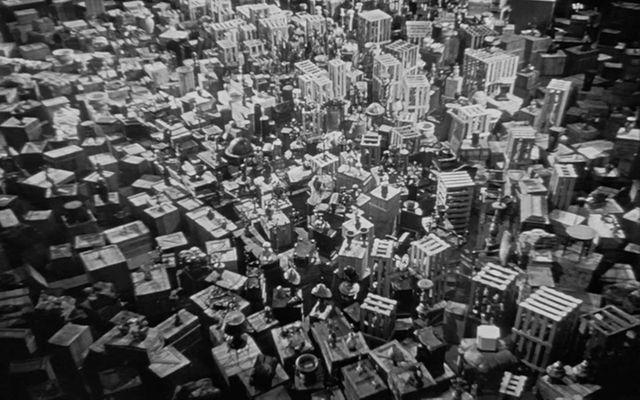
Citizen Kane
James Naremore (The Magic World of Orson Welles) comments that “Kanemay not have been a thoroughgoing anti-capitalist attack, but it was close enough to ensure that Welles would never again be allowed such freedom at RKO.” Welles’ woes in that regard are well documented, and they resulted in his next film being mangled by the studio.
Based on a Booth Tarkington novel, The Magnificent Andersons follows several decades in the decline in the fortunes of the Amberson family, at one time the most distinguished family in a small Midwestern city. Isabel Amberson (Dolores Costello) should have married the bright, up-and-coming inventor-industrialist Eugene Morgan (Cotten). Instead she wed the passive, uninspiring Wilbur Minafer (Don Dillaway).
Twenty years later, Minafer is dead and Morgan is a widower with a teenage daughter, Lucy (Anne Baxter), more or less the same age as Isabel’s son George (Tim Holt). Morgan, an automobile pioneer, and Isabel resume their interrupted relations. But the spoiled, impossible George, egged on by his frustrated, unmarried Aunt Fanny Minafer (Moorehead), thinks Morgan isn’t good enough for the Amberson-Minafers. Isabel dies unhappily, and the Ambersons’ economic condition goes rapidly downhill.
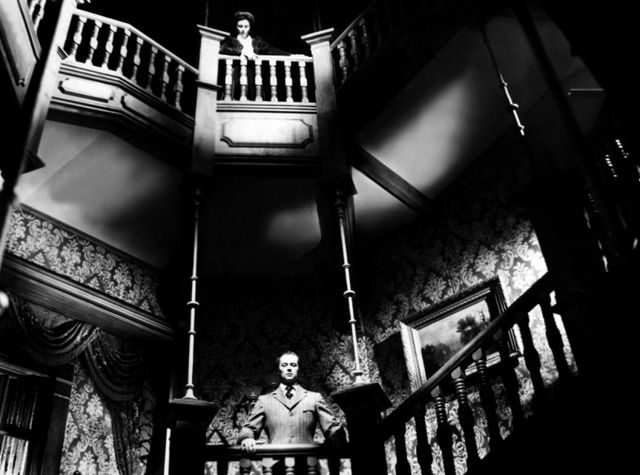
The Magnificent Ambersons
Moorehead in her anguish and, ultimately, hysteria is unforgettable, especially in scenes that take place in the Amberson mansion’s stairways. The final sequences of the film were not shot or edited by Welles, and simply have to be ignored. As a whole, or at least in what’s left of it, The Magnificent Ambersons is a more fluid and humane work than Citizen Kane, less focused on one individual (tellingly perhaps, it is the only one of his films in which Welles does not appear as an actor, although he does the narration), and with moments of extraordinary intimacy. Both early films benefit enormously from the presence of Joseph Cotten, who brings depth and complexity to his characters.

Welles and the left intelligentsia in the US

One of the legitimate criticisms that can be made of Welles’ film work is that it never took on one of the thorniest questions in American political life, the role and evolution of liberalism and the Democratic Party, and, specifically, that he never addressed popular illusions in Franklin D. Roosevelt. In part, this is because Welles shared many of those illusions.
The question of Welles’ political opinions and positions, and their evolution, is a large one, which can only be touched upon briefly here. In any event, it is not so much a matter of his personal views as those of the left intelligentsia as a whole in the US in the era under discussion.
In the years 1937-38, Welles was quite close to individuals in the Communist Party (CP) and to the party’s policies. He and John Houseman introduced their new Mercury Theatre to readers of the Daily Worker, the CP newspaper, in a September 1937 article headlined “Theater and the People’s Front.” The new theater group, they explained, would be “another step … towards a real People’s Theatre in America.”
According to Michael Denning’s The Cultural Front (a source of useful information, but a deeply wrongheaded book, which whitewashes the role and impact of Stalinism), “By the spring and winter of 1938, Welles was a regular part of Popular Front events: in February, he introduced a New Masses [Communist Party cultural magazine] concert; in March, he and [composer Marc] Blitzstein [The Cradle Will Rock] appeared at a Workers Bookstore symposium on the ‘Culture of the People’s Front’; in April, he appeared at the American Student Union’s Peace Ball.”
Welles’ 194-page FBI file, initiated in March 1941 just prior to Citizen Kane’s opening, lists a host of organizations, “said to be Communist in character,” with which he had associated himself, including the Negro Cultural Committee, the Workers Bookshop, the American Youth Congress, the People’s Forum, the Hollywood League for Democratic Action and many more.
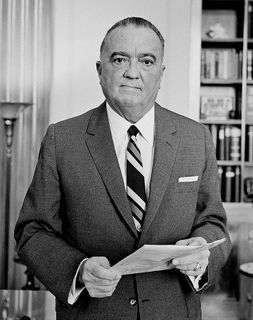
FBI Director J. Edgar Hoover
One FBI memo, dated November 1944, asserts flatly, “Welles has been a consistent follower of the Communist Party line.” Another memo a month later reports on the “Salute to Young Americans Dinner,” sponsored by the American Youth for Democracy, “the successor to the Young Communist League.” The memo explains that “Welles concluded his remarks by stating that Fascism in the United States was still possible until all the greedy people in this country had been killed.”
Although unable to find any record of Welles’ membership in the Communist Party, probably because he never joined, top FBI officials in 1944 placed Welles’ name on the agency’s secret Security Index. This list contained “the names of those individuals who can be considered to be a threat to the internal security” of the US and who would be rounded up and interned in the event of a national emergency. His name was removed from the Index in September 1949, after he had been in Europe for a couple of years.
There is no difficulty in proving that Welles was a fellow traveler of the Communist Party into the war years and perhaps still by the end of the war, but what precisely does that mean? “At various times,” notes James Naremore, “he called himself a Socialist, remaining strongly anti-fascist yet somehow within the ‘pragmatic’ ethos of the New Deal.”
In Socialism, Historical Truth and the Crisis of Political Thought in the United States, David North notes the profound impact of the Wall Street Crash on the American intelligentsia, producing as it did “within this social milieu a certain sense of urgency, a heightened interest in social problems and even a degree of sympathy for radical politics.”
These sentiments often translated into a general sympathy for the Soviet Union. This was deepened when the Stalinist Communist International adopted the policy of the “Popular Front” in 1935. According to this political line, the various Communist Parties were to ally themselves with, and support in every way, the liberal and progressive parties of what the Stalinists referred to as the “democratic” bourgeoisie.
North explains, “Parties, politicians and governments were no longer defined and analyzed on the basis of class interests they served. Rather, they were to be evaluated as either ‘fascist’ or ‘antifascist.’ The political independence of the working class and the goal of socialism were to be sacrificed in the interest of what was really an imperative of Soviet foreign policy.”
The admiration among liberals for Soviet accomplishments and support for the Soviet regime, he notes, “did not at all signify an endorsement of revolutionary change in the United States. Far from it. Rather, many liberal intellectuals were inclined to view an alliance with the USSR as a means of strengthening their own limited agenda for social reform in the United States, as well as keeping fascism at bay in Europe.”
In 1938, the Russian revolutionary Leon Trotsky observed in Art and Politics in Our Epoch, “A whole generation of ‘leftist’ intelligentsia has turned its eyes for the last ten or fifteen years to the East [the USSR] and has bound its lot, in varying degrees, to a victorious revolution, if not to a revolutionary proletariat. Now, this is by no means one and the same thing.” In the victorious revolution, Trotsky pointed out, there was not only the revolution, but the new privileged social layer, the Stalinist bureaucracy, that had raised itself on the shoulders of the revolution. “In reality, the ‘leftist’ intelligentsia has tried to change masters. What has it gained?”
In the US, the Stalinists aggressively courted liberal and radical intellectuals in the late 1930s and, as North writes, “in many respects the day-to-day politics of the Communist Party assumed an increasingly liberal coloration, most notably in the American CP’s virtual endorsement of Roosevelt and the New Deal.” For many left intellectuals, “their personal identification with the Soviet Union seemed, at least in their own eyes, to make up for the fact that they lacked any independent program for radical action in the United States.” CP members and supporters in Hollywood presented themselves, and probably thought of themselves in many cases, as merely the most fervent and politically far-reaching of Roosevelt’s supporters.
When it came to considering events like the Moscow Trials—at which the leaders of the October Revolution were denounced as counter-revolutionaries and agents of fascism and condemned to death—and the entire genocidal campaign against socialists and revolutionaries carried out in the USSR by the Stalinist regime in the late 1930s, the left intellectual milieu in the US made its evaluations on the basis of its own narrow social interests and generally petty concerns.
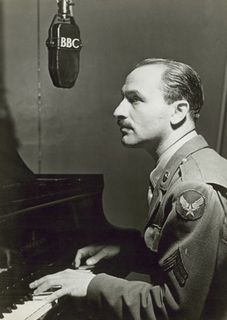
Composer Marc Blitzstein
It is certainly a stain on the reputation of major artists such as Charlie Chaplin, Theodore Dreiser and Richard Wright, and on that of lesser figures too—Marc Blitzstein, Dorothy Parker, Nathaniel West, Henry Roth, Ring Lardner Jr., Rockwell Kent, Dashiell Hammett, Lillian Hellman, John Garfield, Morris Carnovsky, etc.—that they publicly endorsed the slanders made in the Moscow Trials against Trotsky and the other Bolshevik revolutionaries.
One of these wretched public statements, endorsed by a number of actors, writers and “educators” and published in the Daily Worker in April 1938, defended supposed Soviet efforts to “eliminate insidious internal dangers,” attacked the “Trotskyite-Bukharinite Traitors” and supported the CPUSA position that the trials and executions prevented “the fascists from strangling the rights of the people.”

Welles’ name does not appear anywhere, although Blitzstein, an enthusiastic Stalinist and Welles’ collaborator at the time, apparently signed every slanderous statement that came his way.
Whether Welles kept himself aloof from the pro-Moscow Trials campaign or was not yet a sufficiently prominent name to be actively pursued by the Stalinists is unclear. In any case, these were the circles in which Welles traveled. And this had short-term and long-term consequences.
As we argued previously, in a review of Reynold Humphries’ Hollywood’s Blacklists, the subsequent devastation of the Hollywood left—and Welles’ fate is part of that general fate—is inextricably bound up with its disastrous misreading of political and social conditions in the US, the character of the Roosevelt administration and the Democratic Party, the world war and the prospects in the postwar period.
We noted, “While millions went into combat motivated by the desire to defeat Hitler and fascism, World War II, in its social and economic essence, remained an imperialist war, a struggle between great power blocs for the division and re-division of the world. The US, with its vast industrial strength and reserves, could afford Roosevelt’s reformist experiments in the 1930s, but that did not make the war aims of the American ruling elite or its plans for the postwar world any less predatory or criminal.”
The Communist Party and its periphery closed their eyes to the incredible brutality of the Allied forces, including the firebombing of German and Japanese cities. They cheered the incineration of Hiroshima and Nagasaki by atomic bombs in August 1945, which killed and maimed hundreds of thousands of civilians, as Welles shamefully did too, in a radio broadcast.
The Hollywood left was terribly unprepared for what was coming. The CP had promised a rebirth of democracy, a New Deal on a grander and more socialistic scale. It had recruited on the basis of support for the war and for “Americanism.” Now that the wartime alliance with the USSR was at an end and the Stalinists had served their purpose of marshaling popular support for the war, “the mask came off and the grisly visage of American imperialism, now the dominant capitalist power, appeared.”
In his short-lived 1945 column in the New York Post, then a liberal daily newspaper, Welles’ chief themes, according to James Naremore, “were the need to perpetuate New Deal social legislation, and the necessity of translating the Allied victory over Germany into a world democracy. He argued for a fair working relationship between labor and capital, but believed government price regulations should continue after the war; he inveighed against a ‘certain sort of businessman’ who ‘openly favors a certain percentage of postwar unemployment,’ saying that such types ‘don’t want any percentage of government control over their affairs. They want to be free as buccaneers, free to encourage a little convenient joblessness.’ He supported the basic structure of American government and encouraged the two-party structure, but at the time he hoped aloud that Henry Wallace [Roosevelt’s vice president during his third term, 1941-45, and Progressive Party candidate for president, supported by the Stalinists, in 1948] would be the next president.”
“Welles could sense a growing propaganda effort against the Russians,” writes Naremore. The Post column commented, “We are still building our Bulwarks against Bolshevism. The phony fear of Communism is smoke-screening the real menace of renascent Fascism.”
Welles, like many of his radical and liberal counterparts, was operating on the basis of a utopian and false perspective, that the “progressive” elements of the American ruling elite, represented by the Democratic Party, could be pressured into opposing the “little Wall St. camarilla” and its supposedly exclusive political agency, the Republican right wing, and into acting in the interests of broad layers of the population. 

American national biography online

Welles, Orson (6 May 1915-10 Oct. 1985), director and actor, was born George Orson Welles in Kenosha, Wisconsin, the son of Richard Hodgon Welles, an inventor and businessman, and Beatrice Ives, a talented amateur musician. Welles was precocious, his pampered childhood abruptly ending after his mother's death when he was nine. At eleven he was enrolled in the progressive Todd School in Woodstock, Illinois, where he directed and acted in classics by Shakespeare and Shaw. After graduation in 1930, he spent a summer at the Chicago Art Institute.

His father died in late December 1930, and the following August Welles set out for a walking and painting tour of Ireland. Although he lacked professional experience, he talked his way into a position with the Gate Theater in Dublin, where he made his stage debut at the age of sixteen. Welles remained in Dublin until March 1933 when he returned to the United States. Although he received respectable notices abroad, he was at first unable to get theatrical work at home. In September 1933 he was offered a place in Katharine Cornell's touring company, in which Welles made his American professional debut that year in The Barretts of Wimpole Street. He married socialite Virginia Nicholson in 1934 and moved to New York. He divorced Nicholson in 1940; they had one child. In New York, with John Houseman, a young theatrical producer, he formed one of the most important partnerships in the American arts. Houseman was running the Negro section of the Works Progress Administration's Federal Theater Project, for which Welles mounted in 1936 a "voodoo version of Macbeth," with an all-black cast plus dancers and drummers. The opening night attracted a crowd of thousands outside the Lafayette Theater in Harlem, and the innovative dynamism of the production as well as the publicity surrounding it launched Welles as a major figure in the American theater.

Over the next three years Welles and Houseman produced a remarkable array of theatrical events, including a striking version of Marlowe's Dr. Faustus, a politically styled production of Shakespeare's Julius Caesar, and Marc Blitzstein's controversial opera, The Cradle Will Rock. In 1937 Welles and Houseman founded the Mercury Theater, which attracted a talented ensemble of actors, many of whom later followed Welles to Hollywood. In addition to his stage career, Welles appeared regularly on radio, playing the Shadow in a weekly adventure drama. He soon had the Mercury Theater on the air, experimenting with the possibilities of radio drama. His best-known Mercury radio play was an updated version of H. G. Wells's science fiction tale, The War of the Worlds, broadcast on Halloween night. Simulating news coverage of a Martian invasion of the United States, the production created panic along the eastern seaboard. The broadcast received widespread publicity and won Welles a contract with RKO Radio Pictures. In July 1939 he went to Hollywood to begin his career in films, the medium that would largely occupy him for the rest of his life.

Welles's unprecedented contract to direct, star in, write, and edit a motion picture was the envy of the movie industry. After some false starts, he settled on an idea developed with Houseman and veteran scriptwriter Herman Mankiewicz, loosely based on the life of newspaper magnate William Randolph Hearst.Citizen Kane, Welles's first feature-length film, so outraged Hearst that he tried to buy the negative and, failing that, banned any mention of the movie in his newspapers. The film, released on 1 May 1941, fared only moderately well at the box office. However, Citizen Kane was directed with such stylistic verve and with such innovative use of cinematography, sound, and music and within such a daring narrative structure that it became one of the most celebrated films ever made.

Welles next directed a costly and ambitious movie based on Booth Tarkington's bestselling novel, The Magnificent Ambersons. Welles had not finished its editing when he went to Brazil to begin shooting a film for the U.S. Office of the Coordinator of Inter-American Affairs. The project was designed to help strengthen relationships among nations of the Western Hemisphere and to counter Nazi influence in South America. Although he shot miles of film, It's All True was never completed. In Welles's absence, the studio severely edited The Magnificent Ambersons and released it without fanfare during the summer of 1942. Although Welles complained throughout his life about the butchering of the release print, critics have regarded The Magnificent Ambersons as one of his greatest films. Welles's last venture at RKO was the 1943 movie version of Eric Ambler's thriller Journey into Fear, which Welles starred in, cowrote, and without credit did much of the direction. In September 1943 he married Hollywood star Rita Hayworth; they had one child and were divorced in 1947. Although he continued to be heard on radio, Welles spent the remaining war years working for the government in various capacities and writing political journalism, mostly essays and editorials.

During the postwar years Welles assumed a frantic pace: acting on radio and in movies, directing and producing for both stage and screen, and giving speeches, making radio broadcasts, and writing editorials and newspaper columns in support of progressive political causes. In 1946 he completed, as director, costar, and coscenarist, a film melodrama, The Stranger; staged an innovative version of Cole Porter's musical Around the World in Eighty Days in New York; and began work as director and costar with Hayworth on The Lady from Shanghai, which was released after much studio revision in 1948. In 1947 Welles prepared another stage version of Macbeth for the Utah Centennial Festival in Salt Lake City. Later that year he directed a film version of the play for Republic Pictures in twenty-one days on a small budget to prove that classics could be made cheaply and be accessible to the average moviegoer; it was released in 1948.

At the end of the 1940s Welles moved to Europe, where for years he acted in films. Among the most celebrated of the roles he created was Harry Lime in Carol Reed's The Third Man (1949). Also in 1949 he began work on a film version of Othello, which received widespread critical acclaim from the European press when it was released in 1952. To make this film, Welles established a pattern he would often repeat, using his earnings as an actor to underwrite his work as a director, for increasingly he was forced to rely on his own intermittent financing to produce his films.

By the 1950s Welles was recognized, at least by European critics, as one of America's most important filmmakers. He next directed Mr. Arkadin, a film based on his own script. Released in 1955, the film was not shown in the United States until 1962. In 1955 he married Paola Mori; they had one child. That same year Welles also appeared in a dramatic version of Moby Dick in London, and the next year he played King Lear on the New York stage. At the insistence of Charlton Heston, who was to star in the film, Welles returned to Hollywood to direct the offbeat and suspenseful Touch of Evil (1958), in which he also played the lead. In Europe in 1962 he began filming his version of Franz Kafka's labyrinthine novel The Trial, which was released in 1963.

During the early 1960s Welles initiated work on a long-standing project about Shakespeare's Falstaff, primarily using material from the two Henry IV plays. The majestic but uneven Chimes at Midnight was released in 1966. Another film, The Immortal Story, based on an Isak Dinesen tale, appeared in 1968. Although Welles continued to work on his own films, Don Quixote, The Deep, and The Other Side of the Wind, none was completed, and he spent his later years acting in films and appearing on the celebrity circuit, making television guest appearances and doing voice-overs for commercials. His last released film,F for Fake (1975), about art forgeries, was premiered at film festivals in New York and San Sebastián.

During the final years of his life Welles received increasing recognition for the quality and originality of his film work. In 1970 the Academy of Motion Picture Arts and Sciences awarded him a special Oscar, and he was presented with a Life Achievement Award by the American Film Institute in 1975. He assisted in a number of documentaries about his career, cooperated in the writing of two books about himself, and continued to trade on his magnificent voice by recording readings of literary works. Until the end, his prodigality stayed with him. Just before his death, financing of his film version of King Lear fell through because of its inflated budget and extremely difficult production requirements. Welles died in Hollywood.

Welles's bold experimentation as a director and actor, on the stage, on radio, and in films, established him as one of the great artists of the twentieth century. However, he will probably be best remembered as a filmmaker of international reputation. Citizen Kane appears on virtually every film critic's list of ten best movies and is regarded by many as the singular achievement of one hundred years of American films. The great French critic André Bazin noted that through his distinctive style Welles had achieved a major breakthrough in the evolution of film language.


Bibliography
Welles's personal papers, scripts, letters, and other miscellany are housed in the Lilly Library of Indiana University. Other libraries with material on Welles are the Federal Theater Collection, George Mason University; the British Film Institute, London; the Academy of Motion Picture Arts and Sciences, Los Angeles; and the Museum of Broadcasting, New York City.


The initial critical assessment of Welles's films was André Bazin's Orson Welles (1950), and most of Bazin's judgments still hold up. The best critical monograph is James Naremore's The Magic World of Orson Welles (1978; rev. ed., 1989). Robert Carringer's The Making of Citizen Kane (1985) traces in detail the elements that went into the making of Welles's first film. Richard France's The Theater of Orson Welles (1977) contains the most thorough analysis of Welles's contribution to the theater, and Orson Welles on the Air: The Radio Years (1988) examines his career on radio. Howard Koch, who wrote the radio play for the "War of the Worlds" broadcast, published an account of the event in The Panic Broadcast (1971). Frank Brady's Citizen Welles (1989) and a long interview book by Peter Bogdanovich, This Is Orson Welles (1992), contain the best and most accurate accounts of his life and work. Bret Wood's Orson Welles: A Bio-Bibliography (1990) provides the most comprehensive bibliography of materials by and about Welles. A New York Times obituary appeared on 11 Oct. 1985.

Orson Welles is Dead at 70; Innovator of Film and Stage

Orson Welles, the Hollywood ''boy wonder'' who created the film classic ''Citizen Kane,'' scared tens of thousands of Americans with a realistic radio report of a Martian invasion of New Jersey and changed the face of film and theater with his daring new ideas, died yesterday in Los Angeles, apparently of a heart attack. He was 70 years old and lived in Las Vegas, Nev.

An assistant coroner in Los Angeles, Donald Messerle, said Welles's death ''appears to be natural in origin.'' He had been under treatment for diabetes as well as a heart ailment, his physician reported. Welles's body was found by his chauffeur.

Despite the feeling of many that his career - which evoked almost constant controversy over its 50 years -was one of largely unfulfilled promise, Welles eventually won the respect of his colleagues. He received the Lifetime Achievement Award of the American Film Institute in 1975, and last year the Directors Guild of America gave him its highest honor, the D. W. Griffith Award.

An Unorthodox Style
His unorthodox casting and staging for the theater gave new meaning to the classics and to contemporary works. As the ''Wonder Boy'' of Broadway in the 1930's, he set the stage on its ear with a ''Julius Caesar'' set in Fascist Italy, an all-black ''Macbeth'' and his presentation of Marc Blitzstein's ''Cradle Will Rock.'' His Mercury Theater of the Air set new standards for radio drama, and in one performance panicked thousands across the nation.

In film, his innovations in deep-focus technology and his use of theater esthetics - long takes without close-ups, making the viewer's eye search the screen as if it were a stage - created a new vocabulary for the cinema.

Frequently Used Cliche
By age 24, he was already being described by the press as a has-been - a cliche that would dog him all his life. But at that very moment Welles was creating ''Citizen Kane,'' generally considered one of the best motion pictures ever made. This scenario was repeated several times. His second film, ''The Magnificent Ambersons,'' was poorly received, but is now also regarded as a classic, although the distributors re-edited it and Welles never liked the result. ''Falstaff'' and ''Touch of Evil,'' two of his later films, were also changed by others before their release.

For his failure to realize his dreams, Welles blamed his critics and the financiers of Hollywood. Others blamed what they described as his erratic, egotistical, self-indulgent and self-destructive temperament. But in the end, few denied his genius.

He was a Falstaffian figure, 6 feet 2 inches tall, weighing well over 200 pounds, with a huge appetite for good food and drink and large cigars. Loud, brash, amusing and insufferable by turns, he made friends and enemies by the score.

His life was a series of adventures whose details are fuzzy, in part because he was a bit of a fabulist, delighting in pulling the legs of listeners, in part because the credit for his achievements is the subject of fierce controversy.

George Orson Welles was born in Kenosha, Wis., on May 6, 1915, the son of Richard Head Welles, an inventor and manufacturer, and of the former Beatrice Ives. His mother was dedicated to the theater, and Welles said he made his debut at 2 as the child of ''Madame Butterfly'' in an opera performance.

A Genius at 18 Months
According to ''Orson Welles,'' an authorized biography by Barbara Leaming published a few weeks ago, Welles's genius was discovered when he was only 18 months old, not by a Broadway producer or agent but by his doctor, Maurice Bernstein, who, pronouncing the child a prodigy, began to furnish him with a long series of educational gifts. These included a violin, painting supplies, a magic kit, theatrical makeup kits and even a conductor's baton.

His parents were divorced; Mrs. Welles died when he was 6, and he spent several years traveling around the world with his father, a bon vivant.

At 10, he entered the Todd School in Woodstock, Ill. His five years there were his only formal education.

Under the guidance of Roger Hill, the headmaster, young Orson steeped himself in student theater, staging and acting in a series of Shakespeare productions. Together, he and Mr. Hill edited ''Everybody's Shakespeare,'' a text for school productions, which sold well for many years.

On his graduation, he took a brief course in painting at the Chicago Art Institute, then sailed for Ireland on a sketching tour. There, smoking a cigar to disguise the fact that he was only 16, he managed to convince the Gate Theater in Dublin that he was a Theater Guild actor on a holiday.
He went on as the Duke in ''Jew Suss,'' followed it with other featured parts and even achieved a featured role at the eminent Abbey Theater, all in his first professional season. Then, after a spell of travel in Spain and Morocco, he returned to Chicago.

Toured With Katharine Cornell
Through Thornton Wilder and Alexander Woollcott, Welles was introduced to Katharine Cornell, who engaged him for supporting roles in a tour that included ''Candida,'' ''Romeo and Juliet'' and ''The Barretts of Wimpole Street.'' When Miss Cornell opened ''Romeo and Juliet'' on Broadway on Dec. 20, 1934, Welles played Tybalt. He was then 19 years old.

Like everything else he did, Welles's acting was a subject of controversy. Some critics would always accuse him of hamming, of hogging the limelight - especially when he was also the director. But many professionals and a large public found his presence electrifying. ''He has the manner of a giant with the look of a child,'' said Jean Cocteau, ''a lazy activeness, a mad wisdom, a solitude encompassing the world.''

Early in his Broadway career, Welles picked up supplementary income as a radio actor. He became familiar to millions as the sepulchral voice of ''The Shadow,'' a wizard who turned virtually invisible to foil criminals. But he kept up with the theater; in 1935 he was engaged by the producer-director John Houseman to star in Archibald MacLeish's poetic drama of the Depression, ''Panic,'' in which he portrayed a tycoon.

To combat unemployment, the Roosevelt Administration had set up the Works Progress Administration, one of the many projects of which was the Federal Theater. With Mr. Houseman as manager and Welles as director, it mounted several striking productions - the black ''Macbeth,'' a starkly austere ''Dr. Faustus,'' a comic ''Horse Eats Hat'' - that excited the theater world.

Even more than some other W.P.A. projects, the Federal Theater also stirred conservative wrath. The last straw came when a troupe featuring Howard da Silva and Will Geer prepared to stage ''The Cradle Will Rock,'' a leftist musical by Marc Blitzstein, in 1937.

The authorities banned the production and locked the company out of the theater on opening night. Welles joined the cast and an audience of 2,000 in a march up Sixth Avenue to a rented theater. To evade the ban, the actors sang from seats in the auditorium, with Mr. Blitzstein conducting from a piano on stage.

Co-founded the Mercury
The Federal Theater soon was liquidated, but Welles and Mr. Houseman went on to found the Mercury Theater. Its first production in late 1937, a ''Julius Caesar'' in modern dress with overtones of Fascist Italy, was a smash hit. The Mercury took in the production of ''The Cradle Will Rock'' that had been banned by Government authorities; it had success also with ''Shoemaker's Holiday'' and ''Heartbreak House.''

Chiefly to provide its actors with steady income, the company signed up with CBS Radio as the Mercury Theater of the Air. Its acting, dramatic tension and inventive use of sound effects set new highs in radio theater.

On Oct. 30, 1938, the Mercury Theater of the Air presented a dramatization of H. G. Wells's ''War of the Worlds,'' in the form of news bulletins and field reporting from the scene of a supposed Martian invasion of New Jersey. It was an event unique in broadcast history, frequently recalled in books, magazine articles and repeat performances.

Many thousands of listeners tuned in after the introduction, heard the music interrupted by flash bulletins and panicked. Some armed themselves and prepared to fight the invaders; many more seized a few belongings and fled for the hills. Police switchboards around the country were flooded with calls.

Welles was already famous; a few weeks earlier, at age 23, he had appeared on the cover of Time magazine as the ''Wonder Boy'' of the theater. Now he was suddenly a household word -the target of some indignation, but also of amused admiration.

Hollywood Contract
The Mercury Theater on Broadway was nevertheless a financial failure, and ended its theatrical existence in early 1939. The following season the company, including such relatively unknown actors as Agnes Moorehead, Joseph Cotten and Everett Sloane, went to Hollywood under a contract with R.K.O. that granted Welles total artistic freedom.

On his first visit to a film studio, Welles is said to have marveled, ''This is the biggest electric-train set any boy ever had.'' The movie community, however, was not entranced by the unconventional young interloper.

A Saturday Evening Post profile in 1940 reflected this view. ''Orson was an old war horse in the infant prodigy line by the time he was 10,'' it said. ''He had already seen eight years' service as a child genius. Some see the 24-year-old boy of today as a mere shadow of the 2-year-old man they used to know.''

Welles was then directing ''Citizen Kane,'' based on a scenario by Herman J. Mankiewicz, with himself in the title role. An impressionistic biography of a newspaper publisher strongly suggestive of William Randolph Hearst, it is now fabled for its use of flashback, deep-focus photography, sets with ceilings, striking camera angles and imaginative sound and cutting.

Kenneth Tynan has written, ''Nobody who saw 'Citizen Kane' at an impressionable age will ever forget the experience; overnight, the American cinema had acquired an adult vocabulary, a dictionary instead of a phrase book for illiterates.'' Stanley Kauffmann called it ''the best serious picture ever made in this country.''

Accusations and Rebuttals
The making of ''Kane'' has been the subject of fierce polemics. Pauline Kael, in a famous New Yorker article in 1971, called it a ''shallow masterpiece'' and ''comic-strip tragic,'' and accused Welles of trying to deny credit to Mr. Mankiewicz, Mr. Houseman and the cameraman, Gregg Toland. This has been rebutted in part by Mr. Houseman - who said he had been the pupil and Welles the teacher in stage creation - and in great detail by many Welles admirers, notably the director Peter Bogdanovich.
It turned out that Miss Kael had not sought to question Welles. His defenders concede that he had thrown violent tantrums, leading to the departure of Mr. Houseman, but say he was frequently generous in praise of his collaborators.

More seriously, the Hearst newspaper chain was accused of seeking to block the showing of ''Kane'' and it long barred mention of Welles and his film in its publications. ''Citizen Kane'' could neither be reviewed nor advertised in its newspapers. An offer was made to pay R.K.O. what it had cost to make the picture plus a modest profit - well below $1 million in all - to destroy all prints of the film.

This was refused. But ''Kane'' drew a mixed reception when it opened in 1941, and it was years before it turned into a profit maker. Welles won an Academy Award for writing the film, and was nominated for directing and acting awards.

Meanwhile, Welles was making Mercury's second movie, ''The Magnificent Ambersons.'' At the close of shooting, Welles acceded to a request by Washington that he fly to Rio de Janeiro to make a good-neighborly documentary on the Mardi Gras. On his return, he found that an impatient R.K.O. had done the final cutting of ''The Magnificent Ambersons.''

Difficulty With Financing
He was deeply hurt, and he disowned the film. On the movie company's side, the assertion was made that Welles was impossible to deal with on content, and unreliable on costs and completion dates. This perception, encouraged by some journalists, made it forever afterward difficult for Welles to obtain financing for his projects.

Welles and his supporters retorted that his budgets were always low, sometimes remarkably so, and that his shooting schedules were sometimes extaordinarily tight. Some concede that, never satisfied with his work, he had an almost neurotic reluctance to view it when done, and several uncompleted works remain in storage.

After ''The Magnificent Ambersons,'' the tireless Welles returned to Broadway in 1941 to direct a dramatization of Richard Wright's ''Native Son,'' which was a triumph; did a series of wartime propaganda broadcasts for the Government; produced and acted in the movie thriller ''Journey Into Fear'' (1942), which was a failure, and starred as Mr. Rochester in the highly popular ''Jane Eyre'' (1943).

Rejected by the Army because of flat feet, he took part as a magician - another of his talents - in a tour of the European Theater of Operations, in which his act was sawing Marlene Dietrich in half. Back home after the war, he adapted and staged a Cole Porter musical version of ''Around the World in 80 Days'' in 1946 that was praised by critics but failed at the box office. He lost $350,000 of his own money in the production.

He also directed and acted in a Hollywood spy thriller, ''The Stranger,'' in 1946, and produced, directed and co-starred with Rita Hayworth in ''The Lady From Shanghai,'' in 1948.

Three Marriages
He and Miss Hayworth, who were married in 1943, were divorced in 1948. They had a daughter, Rebecca. Welles had a son, Christopher, from his first marriage, to Virginia Nicholson, which also ended in divorce. In 1955, he married the Italian actress Paola Mori, who appeared with him in his ''Mr. Arkadin.'' They have a daughter, Beatrice.

In part because of his losses from ''Around the World,'' which were ruled nondeductible for tax purposes, Welles moved to Europe, where he lived most often in Spain, for many years. From time to time, he would act in a film or television show or in television commercials - he was always in demand as a performer - and from time to time would use his earnings and what financing he could raise to make a picture, or part of one. His acting talents enhanced such films - made by other directors - as ''Tomorrow Is Forever,'' ''The Third Man,'' ''Compulsion,'' ''A Man for All Seasons'' and ''Catch-22.''

In Italy and Morocco, at intervals from 1949 to 1952, he put together and starred in ''Othello'' and ''Macbeth.'' The latter film, shot in three weeks, has been violently criticized. In Mexico and Paris, beginning in 1955, he filmed the not yet completed ''Don Quixote.'' In four European countries in 1954, he made ''Mr. Arkadin,'' based on a thriller he had written himself.

In Paris and Zagreb, Yugoslavia, in 1962, he wrote, directed and acted in ''The Trial,'' based on the Kafka novel. Many critics decry it; some call it a masterpiece. He completed two other films in Europe and, in 1970, began a major project, ''The Other Side of the Wind,'' which remains unfinished. His last directorial effort to be released was ''The Immortal Story'' in 1968; he also performed in it.

In 1958, Welles returned briefly to Hollywood to act with Charlton Heston in ''Touch of Evil.'' At Mr. Heston's suggestion, Welles was enlisted as director as well. Some admirers consider it one of his best films, and its opening scene, coming to a climax in a car explosion, is a model of the genre, although Welles was to complain that it, too, had been re-edited by the studio without his permission.
He also staged, and appeared in, a successful run of ''Othello'' in London, and was featured in dozens of television shows.

Boycotted New York Stage
He refused to appear on Broadway, however, after an unfortunate appearance in ''King Lear'' during which, having broken an ankle, he acted in a wheelchair. He vowed that he would never return to the New York stage while Walter Kerr was still a critic there. Writing for The New York Herald Tribune, Mr. Kerr had described Welles as ''a buffoon,'' ''an actor without talent'' and ''an international joke, possibly the world's youngest has-been.''

Mr. Kerr was not the only hostile critic. In 1963 Stanley Kauffmann, although more admiring of Welles's virtuosity, also accused him of overacting and concluded, ''After 'Kane,' his film directing consists of sometimes glittering, often wild attempts to recapture that first fine careful rapture.''
That was the common reception given in this country to Welles's film ''Falstaff,'' which had been hailed in Europe under the title ''Chimes at Midnight.'' When it appeared here in 1967, a number of critics panned it, one calling Welles ''inarticulate'' and saying he made Falstaff ''a sort of Jackie Gleason.''

More recently, however, The Times's Vincent Canby wrote that the picture ''may be the greatest Shakespearean film ever made.''

The film and television writer Stephen Farber commented: ''Looking back over American movie history - a history of wrecked careers - you begin to see that the critics have a lot to answer for. The classic victim is Orson Welles.''

This was, of course, also Welles's view. He complained, ''They don't review my work - they review me.'' It cannot be doubted that his flamboyant personality, his enormous early success, his pride and his lofty aspirations caused critics to measure him against standards they might not have applied to a more modest film maker.

He was the legendary sort of figure upon whom old anecdotes are rehung. Mr. Mankiewicz, for example, was reported by Miss Kael to have said of Welles, ''There, but for the grace of God, goes God.''

Welles inspired harsh criticism, yet most people felt that even his most unsuccessful, most self-indulgent works all had some feature, some turn that was memorable. There were no dissenters when, at the dedication of a Theater Hall of Fame in New York 1n 1972, his name was among the first to be chosen.

On His 100th Birthday, Rethinking Orson Welles

When Orson Welles was born 100 years ago on May 6, 1915, there were no radios or television, and movies still hadn’t learned to talk. From age 26 until his death in 1985, Welles established himself as an innovative but turbulent filmmaker. He narrowly missed the high-tech media revolution that might have saved his troubled film-directing career.
Welles reading his script during a rehearsal of ‘King Lear.’ENLARGE
Welles reading his script during a rehearsal of ‘King Lear.’ PHOTO: CORBIS
Yet in a surprising number of ways, Welles himself set the stage for that revolution—and technology has repaid the compliment by restoring many of his films, allowing them to be seen and appreciated by more people than ever saw them in theaters during their initial release. Thanks to new formats and streaming services, his work is ubiquitous today.
Welles’s father was the inventor of a successful bicycle lamp; his mother was a gifted musician. Welles would grow up to employ technical innovation in the service of art as few have before or since.
His directing and acting career took off in New York during the 1930s, when he upended the traditional staging of Shakespeare. His all-black “Macbeth” was set in Haiti and featured voodoo drumming; the actors in his “Julius Caesar” wore fascist uniforms, and the stage was illuminated by beams of light suggesting a Nazi rally.
In 1938, Welles continued to innovate with a radio production of H.G. Wells’s “The War of the Worlds,” told as a series of news bulletins interrupting an evening of dance music. The sheer immediacy of what may be called “reality radio”—a cacophony of sirens, screams and sounds of New York under attack—created a theater of the mind that has been imitated since but never equaled.
That smashing success brought the cinema neophyte an unprecedented Hollywood contract in 1939, when he was 24. The result: Welles co-wrote, directed and starred in “Citizen Kane” (1941), the story of a newspaper tycoon seen through multiple perspectives. “Kane” changed the look of modern movies, using pathbreaking “deep focus” photography to create tableaux in which a group of actors, close to the camera and far away, were all in sharp focus.
The shot of a mass audience applauding gubernatorial candidate Kane could be produced by CGI effects today; Welles used a painting of a crowd and then poked pinholes in it, flashing lights behind the painting to give the impression of movement.
“Kane” anticipated much of today’s filmmaking and even “mashup” videos by daringly mixing such movie genres as the newspaper picture, political drama, musical, Gothic thriller and even the western, while drawing on German expressionism and Soviet montage to give the film a style that transcended them all.
Welles confronted technology and the world of his father in his next film, “The Magnificent Ambersons” (1942), the tale of a wealthy Midwestern family’s decline into ruin with the invention of the automobile—their urban holdings devalued by the rise of suburbs. The forward-thinking auto maker Eugene Morgan tells them, “I think men’s minds are going to be changed in subtle ways because of automobiles”—much as new digital technologies are changing minds today.
One sequence had the camera gliding through the Amberson mansion and up its massive staircase. Filming this required large, heavy cameras and giant sets that had to be moved. Today lightweight digital cameras can accomplish the same shots with ease, but film directors think of doing such bravura work because of Welles.
“Ambersons” foundered after Welles took a moviemaking trip to Brazil that left him out of the country and out of the loop as studio machinations cut the heart out of his creation. Not there to defend the film—or himself—he gained a reputation in Hollywood as a high-spending and high-living dilettante, not to be trusted behind the camera.
Welles left America in 1948 to spend most of the next two decades in Europe. Exile forced him to become one of the first independent, guerrilla filmmakers, working as cheaply as possible, shooting films with money made through his acting jobs. His “Othello” took nearly four years to finish, as he waited for actors and money to arrive.
Shooting small bits of film at a time, often with no more than one actor present, Welles did quick, over-the-shoulder shots, using doubles and dubbing voices later. A necessary evil at the time, today it is de rigueur for actors to perform in front of green screens, talking to others who will be digitally inserted later.
When Welles returned to America in 1970 to make his comeback film, “The Other Side of the Wind,” he intended it to reflect a society where, as Marshall McLuhan asserted, “the medium is the message.” The film’s hero is Jake Hannaford, an aging film director and a macho relic of Hollywood’s Golden Age, now making his own comeback movie. Constantly followed by sycophants and journalists, Hannaford is shot in multiple film modes: 8mm and 35mm, video and still photos, black-and-white and color.
Welles appropriately cast fellow director John Huston as Hannaford, and urged the cast to improvise its dialogue. He then edited each scene so that shots were often no more than a second or two, foreshadowing the quick cuts by today’s filmmakers. He cut tiny slices from each of the film modes. The effect was a combination of today’s reality TV and YouTube clips.
Welles’s guerrilla filmmaking techniques at this time included collecting unused scraps left on reels at film labs. He had his crew film on the old MGM lot by pretending to be UCLA film students. The director of “Citizen Kane” was making movies like a brash film student, but “Wind” remained uncompleted at Welles’s death, complicated by funding shortfalls, scheduling delays and a reluctance on Welles’s part to commit to a time frame to finish the job.
If Welles were starting out today, new technologies would enable him to realize his most ambitious visions. His independent films could be assembled quickly, easily and cheaply using digital video editing tools. He could crowdfund his projects using sites like Kickstarter, while maintaining creative control over his work.
Rather than be hamstrung by the old system of film distribution, Welles could stream his work online. His long, complex stories, invariably cut by the studios, might now be required binge-watching.
“I think it would be fun to run a newspaper,” the young Charlie Kane declares in what is arguably cinema’s greatest film. Imagine how much fun Orson Welles, the indefatigable maverick and innovator, would be having now.
 
 
Blogger Templates